Introduction: The Useless yet Essential Accessory
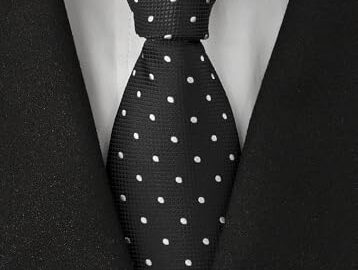
In the vast lexicon of human attire, few items are as paradoxically functionless and socially powerful as the men’s necktie. It provides no warmth, covers no nudity, and serves no ergonomic purpose. Yet, for nearly four centuries, a strip of fabric knotted around the throat has served as a primary signifier of status, professionalism, respectability, and occasionally, rebellion.
To understand the history of the necktie is to understand the history of men’s fashion itself. It is a story that weaves through the battlefields of the Thirty Years’ War, the royal courts of France, the industrial factories of England, and the boardrooms of Wall Street. The necktie has evolved from a rough cloth used to wipe sweat from a soldier’s brow to a silk masterpiece of geometric precision. This essay explores that evolution, examining how the tie survived revolutions, wars, and the casualization of the workplace to remain the exclamation point of the male wardrobe.
Ancient Antecedents: The Pre-History of the Tie
While the modern necktie has a specific lineage dating back to the 17th century, historians have identified ancient precursors that hint at humanity’s long fascination with neckwear.
The earliest potential ancestor of the tie is found in the tomb of China’s first emperor, Qin Shi Huang. His Terracotta Army, crafted around 210 BC, features statues wearing neck cloths with folded detail. However, scholars debate whether these were badges of rank or simply functional scarves intended to protect the neck from armor chafing.
Similarly, in Western history, the Trajan’s Column in Rome (erected in 113 AD) depicts Roman legionnaires wearing fabric knotted around their necks. These focalas were almost certainly utilitarian, used to absorb sweat and prevent the heavy metal armor from rubbing against the skin. While these early examples establish a precedent for neckwear, they lacked the decorative purpose that defines the modern tie. They were tools of war, not instruments of vanity.
The 17th Century: The Croatian Mercenary and the Birth of “La Cravate”
The true genesis of the modern tie occurred during the Thirty Years’ War (1618–1648). In the 1630s, King Louis XIII of France employed Croatian mercenaries to support his war efforts. These soldiers, known for their fierceness, wore distinct, knotted handkerchiefs around their necks.
For the officers, these cloths were made of fine silk or muslin; for the common soldiers, they were rougher cotton or linen. The function was practical—to keep the collar of their jackets closed—but the French court was mesmerized by the aesthetic. They were a stark departure from the stiff, lace “ruff” collars that had dominated Elizabethan and Jacobean fashion. The ruff was expensive, uncomfortable, and required immense maintenance (starching and wiring). The Croatian neck cloth, by contrast, looked dashing, negligent, and heroic.
The French named this new accessory after the people who wore it: Croates. Through the linguistic corruption typical of the era, “Croates” evolved into “Cravates.”
When Louis XIV (The Sun King) ascended to the throne, he embraced the cravat with enthusiasm, appointing a dedicated “cravatier” to his royal household whose sole job was to select and tie the King’s neckwear. With the royal stamp of approval, the cravat spread across Europe. In 1660, when Charles II returned to England from exile to reclaim the throne, he brought the cravat with him, cementing its place in English aristocracy.
The 18th Century: The Stock and the Steinkirk
As the 18th century progressed, the loose, flowing cravat briefly gave way to a more rigid style known as the Stock. This was a stiffened neckband, often made of leather or horsehair and covered in cloth, which buckled at the back of the neck. It forced the wearer to hold his chin high, creating an air of aloof superiority that became associated with the aristocracy. It was also undeniably uncomfortable—essentially a sartorial neck brace.
However, the chaotic nature of war intervened in fashion once again. During the Battle of Steenkerque in 1692, French princes were reportedly surprised by an enemy attack. Lacking the time to properly tie their elaborate cravats, they hastily twisted the ends and tucked them into a buttonhole of their coats. This “studied negligence” became a massive trend known as the Steinkirk, proving that in men’s fashion, the appearance of nonchalance is often the most labored effect of all.
The 19th Century: Beau Brummell and the Art of the Knot
The 19th century was the golden age of neckwear, largely due to one man: George “Beau” Brummell.
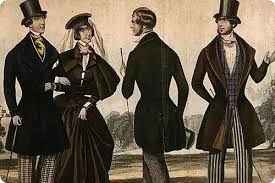
Brummell is the father of modern dandyism and arguably the inventor of the modern suit. He rejected the peacock brilliance of 18th-century court dress (velvet, lace, gold embroidery) in favor of perfect tailoring, dark coats, full-length trousers, and pristine white linen. The centerpiece of this look was the cravat.
For Brummell, the cravat was an obsession. It had to be starched to perfection and knotted with a complexity that defied logic. Legend has it that Brummell would spend hours every morning trying to tie the perfect knot. If a cravat creased in the wrong place during the attempt, he would discard it and start with a fresh one. A visitor once saw a pile of crumpled white cloths on the floor of Brummell’s dressing room; his valet quietly explained, “These are our failures.”
Brummell transformed the tie from an accessory into a mark of character. To tie a cravat well required patience, dexterity, and style. Books were published on the subject, such as the 1818 pamphlet Neckclothitania, which listed over a dozen distinct knots, including the Oriental, the Mathematical, and the Trone d’Amour.
During this era, two distinct styles emerged that bridged the gap between the cravat and the modern tie:
- The Ascot: A wide, pale grey patterned silk tie, usually worn with morning dress (formal day wear).
- The Bow Tie: Evolving from smaller, tighter cravat knots, this became a staple for evening wear and scholars.
The Industrial Revolution and the “Four-in-Hand”
By the mid-to-late 19th century, the Industrial Revolution had accelerated the pace of life. The average man no longer had hours to spend starching and folding elaborate linen cravats. He needed something simple, durable, and quick to tie before heading to the office or the factory.
This necessity birthed the Four-in-Hand knot and the long tie. The name “Four-in-Hand” is believed to derive from a carriage driving club in London. Drivers of four-horse carriages (four-in-hand) needed a knot that was secure but easy to tie while holding reins. They adopted a long, narrow strip of fabric tied in a slipknot. This is essentially the necktie knot used by the majority of men today.
Simultaneously, the “club tie” was born. In 1880, members of the rowing team at Exeter College, Oxford, took the ribbons from their straw hats and tied them around their necks. This created the first “school tie,” initiating the tradition of using striped ties to signal membership in a specific social group, regiment, or university.
1924: Jesse Langsdorf and the Modern Tie
If Beau Brummell is the spiritual father of the tie, Jesse Langsdorf is its structural engineer.
Until the 1920s, ties were often flimsy. They were cut from a single piece of fabric “on the grain” (parallel to the weave). This meant that when knotted, they wrinkled easily, hung poorly, and lost their shape quickly.
In 1924, Langsdorf, a New York tie maker, patented a new method of construction. He cut the fabric at a 45-degree angle (on the bias). This utilized the fabric’s natural elasticity, allowing the tie to drape evenly and return to its original shape after being knotted. Furthermore, Langsdorf developed the three-piece construction method (sewing three separate segments of silk together) which is still the industry standard today.
This was the birth of the modern tie. Langsdorf’s innovation allowed for a wider variety of fabrics and patterns, leading to the explosion of tie styles in the 20th century.
The 20th Century: A Decade-by-Decade Evolution
With the structure perfected, the 20th century became a playground for width, color, and pattern.
- The 1920s and 30s: The Art Deco movement influenced neckwear with bold geometric patterns (checks, plaids, and stripes). The Duke of Windsor popularized the Windsor Knot, a thick, triangular knot that required a tie with extra length.
- The 1940s: World War II brought fabric rationing, but the post-war era saw the “Bold Look.” Ties became wider (up to 5 inches) and featured “Art Deco” prints often called “swank” patterns—tropical scenes, hunting motifs, and bright swirls. This was a release of pent-up energy after the drab war years.
- The 1950s: The pendulum swung back to minimalism. The Skinny Tie emerged, perfectly complementing the slim-fit, grey flannel suits of the Mad Men era. Knitted square-bottom ties became popular. The look was understated and sharp, mirroring the conformity of the corporate age.
- The 1960s and 70s: The “Peacock Revolution” exploded. Fueled by designers like Ralph Lauren (who launched his Polo brand with a line of wide ties), neckwear became enormous. The Kipper Tie (named because of its resemblance to the fish) could be 5 or 6 inches wide. Colors were garish, prints were psychedelic, and the tie became a banner of counter-culture fashion invading the establishment.
- The 1980s: The era of the “Power Tie.” Wall Street culture, epitomized by the film Wall Street and its anti-hero Gordon Gekko, favored bold contrasts. A yellow or bright red silk tie against a blue shirt with white collar signaled aggression, dominance, and financial success. The tie was no longer just fashion; it was armor for corporate warfare.
The Decline: Casual Fridays and the Silicon Valley Effect
The 1990s marked the beginning of the end for the tie’s ubiquity. The dot-com boom introduced a new archetype of success: the tech billionaire in a t-shirt. Silicon Valley viewed suits and ties as archaic artifacts of “Old Economy” bureaucracy.
Simultaneously, the concept of “Casual Friday” migrated from Hawaii (where “Aloha Fridays” were common) to the mainland US corporate world. What began as a one-day relaxation of dress codes quickly spread to the rest of the week. By the early 2000s, “Business Casual”—usually defined as khakis and a button-down shirt without a tie—became the norm.
The tie retreated to the realms of high formality: weddings, funerals, court appearances, and politics. Even in politics, the “rolled-up sleeves, no tie” look became a favorite for candidates wanting to appear relatable to the working class.
Symbolism and Psychology: Why We Wore It
Why did men endure a tight strip of cloth around their windpipes for 400 years? The longevity of the tie can be attributed to its profound psychological signaling.
- Conformity and Tribe: The “Old School Tie” is a literal phrase in Britain referring to using a tie to identify someone of the same social class or educational background. It signals, “I belong to this group.”
- Phallic Symbolism: Fashion historians often note the tie’s role as a subliminal arrow pointing to the genitals. It is a distinct vertical line that draws the eye down the torso.
- Discipline: A tied tie implies a man who is “put together.” A loosened tie implies a man who is working hard or relaxing after a struggle. The state of the knot tells a story about the wearer’s current state of mind.
Conclusion: The Future of the Necktie
Today, the necktie occupies a strange liminal space. It is no longer mandatory, which has, ironically, saved it from mediocrity. Because men are no longer forced to wear ties, those who choose to wear them do so with greater intention and style.
The cheap, polyester novelty ties of the 90s have largely vanished, replaced by a renewed interest in artisanal craftsmanship—grenadine silks from Italy, seven-fold constructions, and vintage revivals. The tie has returned to its roots as a form of “Peacocking.” It is now an accessory of distinction rather than a uniform of drudgery.
From the sweat-soaked focalas of the Roman Legion to the silk cravats of the Sun King, and from the bias-cut patents of 1924 to the power reds of the 1980s, the necktie has been a silent witness to history. It has constricted the necks of kings and clerks alike. While its daily ubiquity may have faded, its power remains. As long as men seek to project authority, elegance, or occasion, they will likely reach for that strip of silk, stand before a mirror, and perform the centuries-old ritual of the knot.