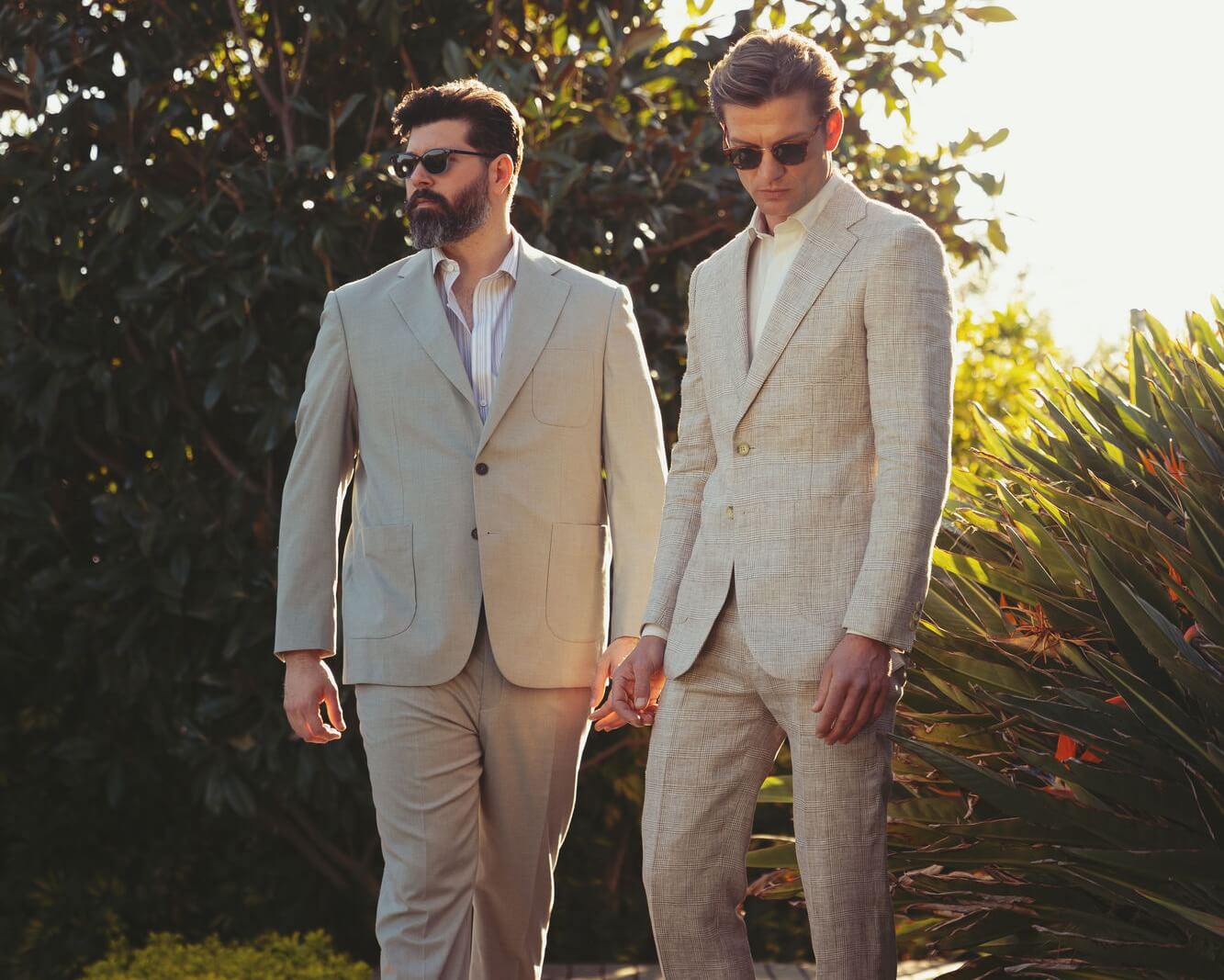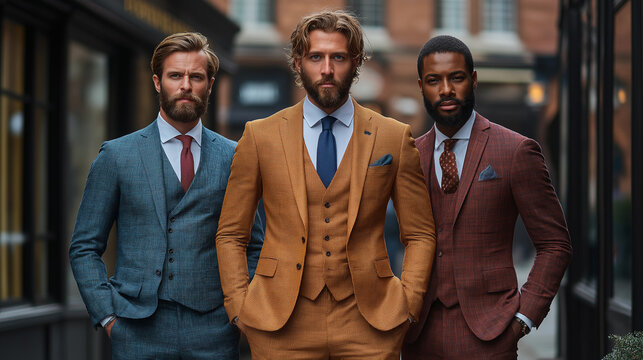
In the dance between design and daily life, we find a symphony of creativity—or, in the case of the mass-produced world, a cacophony of compromise. To dress is not merely to cover one’s body; it is to present a narrative to the world, a silent declaration of intent, character, and self-respect. In this pursuit of aesthetic excellence, the modern gentleman faces a critical choice: the convenient allure of the ready-to-wear rack, or the disciplined, artistic journey of the tailored suit.
While the world moves faster, demanding instant gratification, the true connoisseur understands that elegance cannot be rushed. The difference between an off-the-rack garment and a tailored masterpiece is the difference between a noise and a melody. One is manufactured; the other is composed. To understand why tailored suits are unequivocally superior is to understand the very essence of luxury, utility, and the human form itself. This is not merely about clothing. It is about the distinctive design of one’s life.
The Illusion of “Standard” and the Reality of Anatomy
The fundamental flaw of the ready-to-wear industry is the presumption of the “standard man.” This mythical figure, constructed from averages and algorithms, exists only in the spreadsheets of mass-market retailers. He has perfectly symmetrical shoulders, a standardized drop from chest to waist, and arms of exact equal length. He does not exist. You, however, do.
Every man is a unique landscape of biomechanics and posture. Perhaps your left shoulder sits a fraction lower than your right, a relic of years carrying a heavy bag or playing a sport. Perhaps you stand with a natural forward lean, or your athletic pursuits have given you a chest that defies the standard “drop” of a size 40 jacket. When you pull a suit off the rack, you are attempting to force your unique, living reality into a static, dead mold. The result is inevitably a compromise. You accept the bunching at the collar, the pulling at the button, the sleeves that swallow your hands or expose your wrists. You accept “good enough.”
But for the man who aspires to greatness, “good enough” is the enemy. Tailoring, particularly the high art of bespoke or made-to-measure, begins with the rejection of the standard. It begins with you.
A tailored suit is sculpted to the individual. It accounts for the slope of the neck, ensuring the collar hugs the shirt without a gap—a hallmark of quality that no machine can consistently replicate. It respects the pitch of the arm, allowing for movement without the entire jacket lifting and destroying the silhouette. When a suit is tailored, the fabric drapes from the shoulders like water, skimming the body’s contours without constricting them. It hides the flaws we wish to conceal and accentuates the strengths we wish to project. It is a second skin, but a better one—one that has been idealized.
The Alchemy of Fabric: Materiality and Soul
Beyond the geometry of fit lies the alchemy of fabric. In the world of mass production, cost is the primary driver. The goal is to maximize margin, which inevitably leads to the use of synthetic blends, lower-grade wools, and fused interlinings. A fused jacket—where the inner structure is glued to the fabric rather than stitched—may look crisp in the store, but over time, the glue degrades. The fabric bubbles; the jacket creates a stiff, lifeless shell that traps heat and suffocates the wearer.
The tailored experience, by contrast, is a tactile journey into the finest mills of Italy and England. Here, we speak of Super 150s wools, cashmere blends, linens that breathe with the wind, and silks that catch the light with a subtle, aristocratic sheen. When you commission a tailored suit, you are not just buying a color; you are selecting a performance.
Consider the drape. High-quality cloth, selected by a master tailor, possesses a “gutsy” resilience. It resists wrinkling, recovers after a long day of travel, and hangs with a gravity that communicates substance. In the hands of a brand like KBREIDO, fabric is treated with the reverence of a sculptor handling marble. The canvas inside the jacket—typically made of horsehair in high-end tailoring—is floating, stitched loosely to the outer fabric. This “full canvas” construction allows the suit to mold to your body over time, learning your shape, becoming more comfortable with every wear. It breathes. It moves. It lives.
Furthermore, the selection of fabric allows for a distinctiveness that off-the-rack simply cannot offer. The racks of department stores are a sea of navy and charcoal, flattened by fluorescent lights. In the realm of tailoring, you explore the nuances of Sharkskin, the depth of a Herringbone, the audacity of a Windowpane check, or the timeless sophistication of a Prince of Wales plaid. You choose the weight of the cloth to match your climate and your lifestyle. You are not passive in the process; you are the co-creator of your armor.
The Symphony of Details: A Personal Signature
True style whispers; it does not shout. It is found in the details that the untrained eye might miss but which the aficionado instantly recognizes. In the world of off-the-rack, these details are decided for you by a committee of designers trying to appeal to the widest possible demographic. In the world of tailoring, you hold the pen.
This is the era of the “Distinctive Design for the Modern Gentleman.” It is about reclaiming the power of choice. What is the width of your lapel? A millimeter difference alters the visual breadth of your chest. Do you prefer the sharp authority of a peak lapel or the classic versatility of a notch? What of the pockets? A ticket pocket adds a touch of British heritage; patch pockets suggest a Neapolitan sprezzatura, relaxed yet elegant.
The buttons on the sleeve—are they functional? On a mass-produced suit, they are merely decorative sewing. On a tailored suit, they are “surgeon’s cuffs,” working buttons that allow you to unfasten a sleeve, a subtle nod to the garment’s authenticity. And then, the lining. Here is where the gentleman keeps his secrets. A suit may be a somber midnight blue on the outside, but the interior can explode with color, a paisley, a silk print, or a personal monogram. It is a reminder that while you navigate the serious world of business and society, there is a fire, a personality, and a joy within.
These choices are not trivial. They are the notes in the composition. They ensure that when you walk into a room, you are not wearing a uniform issued by a brand; you are wearing a garment that is undeniably, irrevocably yours.
The Economics of Longevity: An Investment in Legacy
There is a vulgarity in the cycle of “fast fashion”—the buying of cheap goods, wearing them until they lose their shape (often a matter of months), and discarding them. It is wasteful, it is inelegant, and ironically, it is expensive. The “cost per wear” of a cheap off-the-rack suit is often astronomical because it is worn with little joy and discarded quickly.
A tailored suit is an investment in legacy. Because of the superior construction—the sewn canvas, the reinforced stitching, the high-quality natural fibers—a tailored suit is built to endure. It can last for decades if properly cared for. It withstands the rigors of dry cleaning and daily wear without losing its structure. In fact, like a good leather shoe or a vintage wine, it often improves with age. The fabric softens and settles; the fit becomes more intuitive.
Moreover, a tailored suit allows for the inevitable changes of life. A quality suit comes with “inlay”—extra fabric hidden in the seams—allowing a tailor to let out the waist or trousers if the years add a few pounds, or take them in if one slims down. Off-the-rack suits typically lack this margin for error. When you outgrow them, they are trash. When you change in a tailored suit, the suit changes with you.
From a financial perspective, one immaculate tailored suit that commands respect and lasts ten years is a far wiser purchase than five mediocre suits that must be replaced every two years. It is the difference between renting your appearance and owning it.
The Psychology of Excellence: The Armor of Confidence
Perhaps the most profound argument for the tailored suit is psychological. There is a tangible shift in mindset that occurs when a man puts on a garment that fits him perfectly. It is the “Alonzo Echavarria” effect—a transformation of posture and presence.
When you wear a suit that fights you—that pulls at the shoulders or sags at the waist—you are subconsciously distracted. You are adjusting, tugging, feeling the friction of the compromise. You are shrinking. But when you slip into a tailored jacket, you stand taller. The structure of the suit supports your frame. The high armhole allows you to gesture freely during a presentation or a conversation. You feel contained, sharp, and aerodynamic.
This physical comfort translates directly into mental clarity and confidence. You are not worried about your appearance because you know it is impeccable. This confidence is projected outward. People treat a man in a tailored suit differently. It commands a subconscious respect. It signals that this is a man who cares about details, who values quality, and who has the self-worth to invest in himself.
In the boardroom, the courtroom, or the ballroom, the tailored suit is a weapon. It separates the leader from the follower. In a sea of ill-fitting, fused polyester, the man in the bespoke wool canvas stands out not because he is flashy, but because he is right. His silhouette is clean. His lines are unbroken. He looks like he belongs in the room—in fact, he looks like he owns it.
The Italian Spirit: A Tradition of Beauty
We must also acknowledge the cultural heritage that the tailored suit represents. When we look to the philosophy of kbreido.com, we see the heavy influence of Italian craftsmanship. Italy is a land where beauty is a civic duty. The concept of bella figura—making a good impression—is central to the way of life.
The tailored suit preserves this artisan tradition. It supports the skilled cutters, the sewers, the fabric mills that have operated for generations. It is a rejection of the soulless automation of the factory in favor of the human hand. There is a romance in knowing that your garment was touched by hands that know the trade, that eyes examined the chalk lines, that a human spirit was poured into the creation of the object.
To wear such a suit is to carry that tradition forward. It is to align oneself with a history of elegance that stretches from the tailors of Savile Row to the sartorias of Naples. It is a declaration that you value the human element in a digital world.
Conclusion: The Final Measure
In the end, the choice between off-the-rack and tailored is a choice between existing and living. One is a commodity; the other is an experience.
A tailored suit is not merely an article of clothing. It is a manifestation of the “Timeless Sophistication” that defines the modern gentleman. It is the intersection of engineering and art. It solves the physical problem of fit, the aesthetic problem of style, and the psychological problem of confidence.
Why are tailored suits better? Because you are not a standard size. You are a complex individual with a unique story, and your clothing should be the cover of that book. To settle for the rack is to edit your story down to a generic summary. To choose the tailored path is to write your own legend—stitch by stitch, inch by inch—until you are standing in a masterpiece that is unmistakably, unapologetically you.
In the symphony of your life, do not let your attire be the discordant note. Let it be the crescendo.